

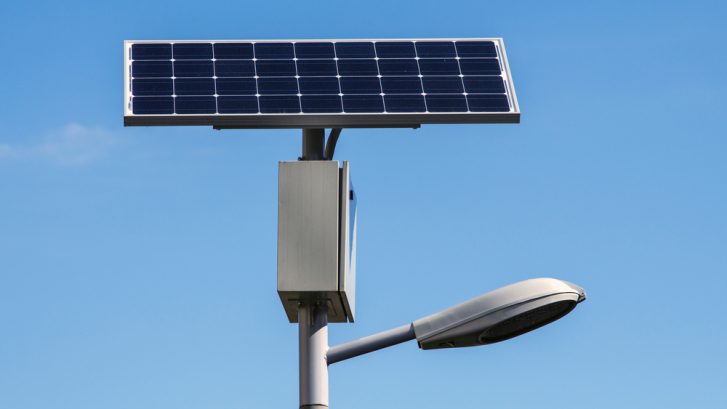
What happens to public safety the moment the grid goes down and every street goes completely dark? For municipal planners and city infrastructure teams, that question stopped being hypothetical a long time ago. Hurricanes, ice storms, and cascading grid failures have turned it into a lived experience across communities that thought they were prepared. A well-considered Design Solar-Powered Street Light for Municipalities strategy is what separates cities that hold their ground during emergencies from those that lose basic visibility when conditions deteriorate the fastest.
The cities that understood this lesson did not learn it from a planning document or a policy brief. They learned it from the aftermath, emergency vehicles crawling through pitch-black intersections, residents stranded without visible safe routes home, and recovery operations delayed because the streets that should have guided everyone through the crisis had gone completely dark, along with everything else. This blog walks through why resilience has become the defining design requirement, and how the right approach delivers it when it actually counts.
How ClearWorld Approaches Design Solar-Powered Street Light for Municipalities
We built our municipal solar lighting systems around one foundational belief: street lighting is emergency infrastructure, not simply a nighttime convenience. ClearWorld works directly alongside city planners, public works departments, and municipal engineers who need lighting solutions that continue performing precisely when surrounding infrastructure stops doing so.
Every system we design begins with a site-specific resilience assessment. We evaluate local weather patterns. Grid vulnerability history, emergency response corridors, and illumination requirements before specifying a single fixture for Design Solar-Powered Street Light for Municipalities. ClearWorld does not hand municipalities a catalog and let them figure it out. We engineer systems built to perform on the worst nights a community ever faces, not just the routine ones.
What Does Resilient Solar Street Light Design Actually Require?
Getting the Design of solar-powered street lights for Municipalities right means treating grid independence as a genuine foundation rather than an optional upgrade. Here is what that looks like across real municipal deployments.
Autonomous Battery Backup
Every fixture in a resilience-focused design carries integrated battery storage sized to maintain full illumination through multiple consecutive nights without solar recharge. Emergency corridors stay lit regardless of how long the outage runs.
Storm-Rated Structural Engineering
Fixtures designed for municipal resilience must physically survive the same conditions that knock the grid out in the first place. Our designs meet strict wind-load and impact ratings matched to each region’s documented weather history.
Emergency Corridor Prioritization
Not every street carries equal weight during a crisis. We work with municipalities to identify critical emergency response routes and prioritize those corridors in the solar design layout, so first responders always maintain the visibility they need.
Independent Communication Capability
Modern municipal solar fixtures integrate wireless monitoring systems that keep operating independently of grid-connected infrastructure. Cities maintain real-time visibility into their lighting network even during the most widespread outages.
Scalable Phased Deployment
Most municipalities cannot retrofit every street at once. Our design approach supports phased implementation, beginning with the highest-priority emergency corridors and expanding systematically as capital budgets allow, without disrupting anything already in place.
Who does ClearWorld Designs Municipal Solar Lighting For
We work with municipalities of every scale, from small townships managing tight public works budgets to large city infrastructure departments overseeing complex multi-district deployments. ClearWorld serves communities that have already experienced grid vulnerability firsthand, and those planning before the next weather event test what they have built. What every client shares is a single priority: keeping residents genuinely safe when surrounding systems cannot.
Conclusion
Grid-dependent street lighting is a public safety vulnerability that municipalities can no longer afford to treat as someone else’s problem. A properly engineered Design Solar-Powered Street Light for Municipalities keeps emergency corridors lit, supports first responders, and protects residents when the grid fails. ClearWorld builds these systems with resilience as the true foundation. The communities planning carefully today will not be the ones navigating darkness when it matters most.