

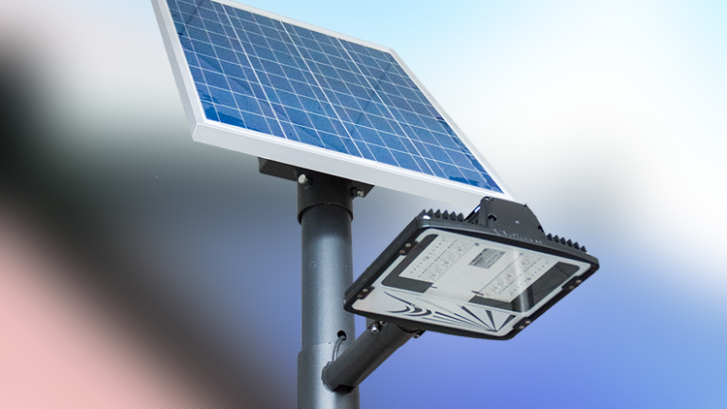
Most municipalities do not find out how fragile their lighting infrastructure is until a storm makes it obvious. Grid-dependent street lighting fails at the worst possible moments, leaving roads dark, residents exposed, and maintenance teams trying to respond across damaged terrain with no quick solution waiting for them. We have worked alongside city teams who have lived through exactly that. Our Solar Public Lighting Municipalities Design approach was built to solve that problem from the ground up, using battery backup systems, off-grid performance, and continuous operation capability to keep public spaces lit through every condition a city faces. This blog explains how that works in practice.
How Does Our Design Keep Lights On?
The core weakness in conventional municipal lighting is straightforward. It depends entirely on the utility grid, and when that grid goes down, every light connected to it goes down with it. Our design approach starts by removing that dependency, which fundamentally changes what a city’s lighting network can deliver when conditions get difficult.
We engineer every Solar Public Lighting Municipalities Design to generate, store, and manage its own energy independently. That means a lighting unit on a rural highway performs the same as one on a busy urban corridor, regardless of what the broader power network is doing at any given moment. Battery backup, sealed components, and smart energy management work together to maintain consistent output through storms, outages, and anything else that disrupts conventional infrastructure.
Battery Backup: ClearWorld systems store enough energy to keep LED fixtures running for up to 80 hours without any solar input. Multi-day storms and extended outages fall well within that window, which means roads and public spaces stay lit without interruption through the events that matter most to public safety.
Sealed Components: Every electrical component mounts sealed at the top of the pole, fully protected from flooding, moisture, and temperature extremes. That design removes the ground-level vulnerabilities that cause conventional systems to fail during the weather events municipalities dread most.
Off-Grid Performance: Our systems carry no utility connection and require no underground cabling. There is nothing buried to flood, corrode, or break during severe weather. Each unit operates as a completely self-contained lighting system from the first night of installation onward.
Why Does Municipal Design Matter for Reliability?
Getting solar public lighting municipalities design right takes more than choosing energy-efficient fixtures. It requires building a complete system around the actual demands of public infrastructure, accounting for severe weather exposure, long service intervals, compliance requirements, and the reality that municipal lighting networks stretch across wide areas with limited maintenance access at every point.
Our design process addresses each of those demands directly. We do not apply a standard product to every project and call it done. We assess site conditions, lighting output requirements, pole height, battery capacity, and smart technology needs for each installation before any equipment is finalised.
Weather Resilience: ClearWorld composite poles withstand wind speeds up to 150 miles per hour, which meets the structural demands of hurricane-prone regions and exposed highway corridors. Municipalities in severe weather zones get infrastructure that holds firm and stays operational when conditions reach their worst.
Smart Monitoring: Every system supports real-time remote monitoring of battery status, energy output, and fault conditions. Municipal teams track their entire lighting network from a single dashboard without physically visiting each site, catching problems early and keeping maintenance costs well under control across large service areas.
Compliance Ready: Our systems meet Buy American manufacturing standards, which matters directly for municipalities working with federal infrastructure funding. Projects stay compliant, procurement moves without complications, and funding eligibility stays secure throughout the entire project lifecycle.
When every one of those design factors is addressed from the beginning, the outcome is a lighting network that performs consistently rather than one that holds up only until conditions get challenging.
Conclusion
Reliable municipal lighting does not happen by accident. It comes from deliberate design decisions that take real operating conditions seriously. Our Solar Public Lighting Municipalities Design approach gives cities the battery backup, off-grid independence, and weather resilience that conventional systems simply cannot match. ClearWorld builds infrastructure that keeps communities lit, safe, and fully supported through every challenge public spaces encounter.