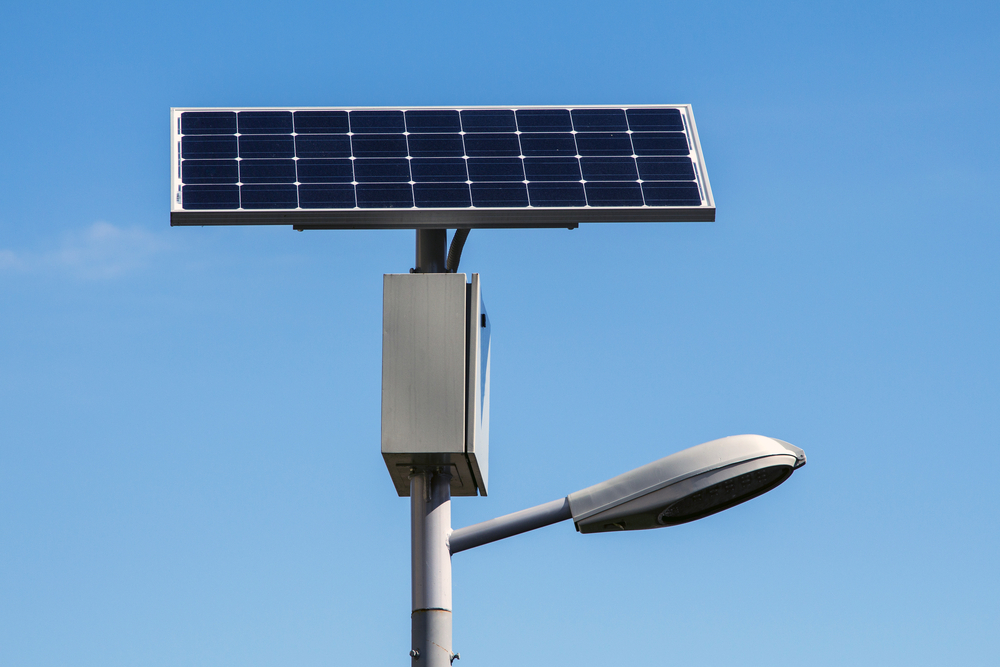
ClearWorld Powers the Future of Sustainable Infrastructure Lighting
Is the outdoor lighting running across city roads and public spaces actually built for the long term? For most municipalities and institutions across the USA, the honest answer is no. Sustainable Infrastructure Lighting changes that equation entirely, replacing grid dependency, rising utility costs, and aging hardware with solar-powered systems that perform independently, night after night. At ClearWorld, we engineer exactly that.
What Are the Core Components of Sustainable Infrastructure Lighting?
Most people think sustainable lighting means swapping out a bulb. It does not. It means rethinking the entire system, how energy gets collected, how it gets stored, and how it gets delivered to the fixture at the end of a long winter night when daylight hours are short, and the grid is under pressure. When those three components are engineered to work together properly, something shifts. The lighting stops being a liability on the municipal budget and starts being infrastructure that actually earns its place.
Here is what we build every system around.
Solar Energy Capture
At the foundation of every system we install is a high-efficiency photovoltaic panel that works through the day, collecting energy from the sun. We do not engineer for ideal conditions; we engineer for the conditions that actually exist on site, because real-world performance is what institutions depend on when the sun goes down, and the streets need to stay lit.
Battery Storage
A solar panel that cannot store what it collects is not infrastructure; it is a liability. We pair every system with lithium-ion battery banks sized specifically for each site’s lighting demands, accounting for consecutive overcast days, seasonal variation, and short winter daylight windows. The goal is simple: the light stays on, regardless of what the sky has been doing for the past 48 hours.
LED Fixture Technology
We finish every sustainable infrastructure lighting system with long-life, high-output LED fixtures built to deliver broad, even light coverage at the lowest possible energy draw. Our LEDs are rated for harsh weather environments across every climate zone in the USA and require significantly less maintenance than the conventional hardware most municipalities are still running today. Less maintenance means fewer crew callouts, lower overhead, and more budget freed up for everything else a public works department is responsible for.
When these three components are matched and balanced correctly, the result is outdoor lighting that generates its own power, operates without utility dependency, and holds up across decades of continuous use.
How Does Sustainable Infrastructure Lighting Benefit the Environment?
The environmental conversation around solar lighting tends to focus on carbon reduction, and that matters. But the full picture is broader than emissions alone. When cities replace grid-tied outdoor lighting with solar-powered systems, the benefits run deeper than what shows up on a sustainability report.
Zero Emission Operation
Every system we deploy runs entirely on solar energy. No combustion, no grid-sourced electricity, no atmospheric output during operation. For municipalities working against measurable climate targets, that is a direct, trackable contribution, not a pledge, not a projection, but an actual reduction visible from the moment the system goes live.
Reduced Chemical Dependency
Conventional lighting infrastructure carries environmental liabilities that rarely make it into budget conversations. Fluorocarbons, mercury, and other compounds linked to older lighting and cooling technologies accumulate over decades of infrastructure use. Our solar LED systems operate without any of those substances, reducing the environmental footprint of outdoor lighting from the component level up.
At ClearWorld, we do not treat sustainability as a feature. We treat it as the baseline our systems are designed around, because cities that are serious about their long-term environmental commitments need infrastructure that reflects those commitments in how it actually operates.
Conclusion
Sustainable infrastructure lighting is the direction cities across the USA are moving, and for good reason. Utility costs are climbing. Climate commitments are tightening. And the infrastructure that was built decades ago was never designed to meet either challenge. From energy capture to battery storage to LED output, every ClearWorld system is engineered to light the way forward responsibly, reliably, and for the long term.