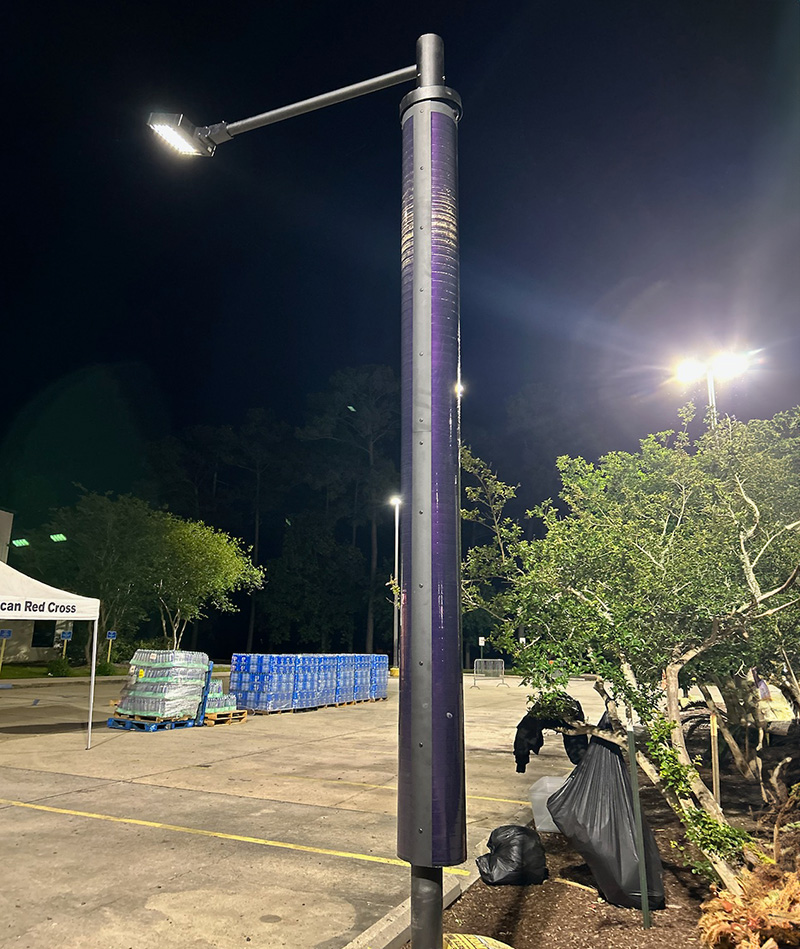
How Can Energy Efficient Street Lighting Cut Costs for Commercial Projects?
What’s the real cost of lighting a commercial development over the next decade? It’s rarely the number developers expect when they first budget for it. We work with commercial and project developers evaluating Energy Efficient Street Lighting as a way to control that cost before it becomes a recurring line item nobody planned for. Here’s how that decision plays out in practice, and where it makes the biggest difference on a project.
How Can Energy Efficient Street Lighting Reduce Development Costs?
Outdoor lighting is one of those infrastructure decisions that quietly shapes a project’s operating budget for years. Get it wrong at the planning stage, and the costs compound long after construction wraps up. Here’s where energy efficient street lighting moves the needle.
- Lower electricity consumption. Efficient fixtures draw a fraction of the power older systems require, which shows up directly on monthly costs.
- Reduced infrastructure spend. Systems that skip trenched electrical runs cut a major expense out of the installation phase.
- Fewer maintenance calls. Well-built fixtures fail less often, meaning fewer service visits over the life of the property.
- Lower utility exposure. Reducing dependence on grid electricity limits how much rising rates affect ongoing costs.
- Better budget predictability. Developers get a clearer picture of lighting costs upfront instead of absorbing surprises later.
Together, these factors turn lighting from an ongoing expense into a fixed, plannable part of the budget.
What Makes Street Lighting Energy Efficient for Commercial Projects?
Not all lighting marketed as efficient actually performs that way once installed and running. The difference usually comes down to a handful of design factors that matter more than the marketing language around them.
- LEDs: LEDs make much more effective use of energy to produce usable light while generating significantly less waste heat compared to old-school lights.
- Smart output regulation: Lights with the capability to regulate their brightness according to time or level of activity don’t have to function at full output.
- Solar power: Self-generated power systems don’t depend on power grids to function effectively.
How Can Developers Choose Energy Efficient Street Lighting for Projects?
Selecting a lighting system isn’t just a spec sheet exercise. It has to reflect the site’s actual conditions and demands. A few questions tend to guide that decision well.
What’s the site’s sun exposure like?
Solar systems have to be sized around the sunlight a site actually receives, not the number on a general regional average. Tree cover, nearby buildings, and seasonal shifts in daylight all affect how much power a fixture can realistically generate, so a system sized on optimistic assumptions tends to underperform once it’s in the ground.
What’s the expected usage pattern?
Parking areas, walkways, and access roads don’t carry the same lighting demands, and treating them as interchangeable usually leads to over-lighting some areas and under-lighting others. Understanding how each zone is actually used, and when, helps determine the right fixture placement, brightness, and coverage for that specific space.
Can existing poles be reused?
Retrofit compatibility is one of the more overlooked factors in early planning, but it can meaningfully change both the budget and the timeline. If existing poles are structurally sound, reusing them avoids the cost of new infrastructure and speeds up installation considerably compared to starting from scratch.
What maintenance support is included?
A lighting system is only as dependable as the support behind it once it’s installed. Developers should understand what maintenance, monitoring, or replacement support comes with a system before committing, since that support determines how much attention the lighting will actually need over its lifespan.
Does the system scale with the project?
Developments that expand in phases, or add infrastructure over time, need lighting that can grow alongside them without a complete redesign at each stage. A system built with scalability in mind saves developers from re-specifying lighting every time a project moves into its next phase.
Energy Efficient street lighting gives commercial developers a practical way to lower operating costs, reduce maintenance demands, and support sustainability goals across a project’s lifecycle. If you’re planning lighting infrastructure for an upcoming development, we’re glad to help you think it through. Reach out to ClearWorld to start the conversation.