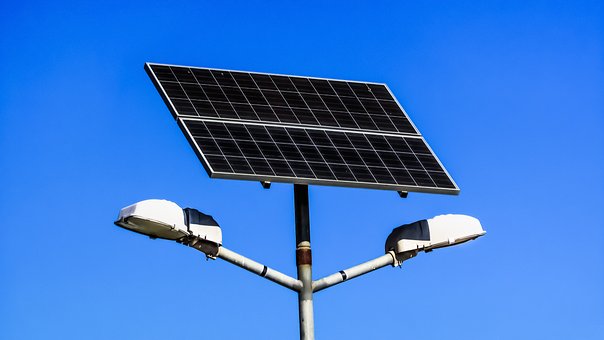
Solar pole lights for rural providers for scalable rural development lighting
What do a rural market, a school pathway, a bus stop, and a local health post all have in common? After dark, without light, they stop working. That is not a minor inconvenience. It is an economic setback repeating every night across communities with very little margin for error. For the agencies, cooperatives, and municipalities responsible for these areas, the question is not whether better lighting is needed. It is the solution that can actually deliver it without waiting on a grid that may never arrive. Solar Pole Lights For Rural Providers are answering that question right now.
How Do Solar Pole Lights Solve Real Community Problems?
Anyone looking into solar pole lights wants one thing: a system that works where conventional infrastructure has already failed. Here is how these services address problems that actually show up on the ground.
Zero Energy Costs from Day One: These systems run entirely off-grid, so rural municipalities stop paying electricity bills the moment lights come on. That recovered budget can go toward schools, roads, or healthcare.
No Grid Infrastructure Needed: Traditional streetlights require trenching, wiring, and transformer upgrades. Solar pole systems need none of that, meaning faster deployment and lower costs in remote locations.
Consistent Night-Time Performance: Research shows that even a single light at a rural intersection can reduce nighttime collision rates significantly. Reliable nightly illumination is not a comfort feature. It is a measurable safety outcome.
Long Service Life, Low Maintenance: Systems built with lithium-ion batteries and long-life LED outputs deliver consistent performance across decades. Communities let down by short-lived investments need that kind of assurance.
Scalable to Any Project Size: Whether it is a single pathway or a full rural corridor, solar pole solutions scale to the actual project scope without grid upgrades at every stage.
Are Solar Pole Lights for Rural Providers the Right Infrastructure Choice?
Not all lighting solutions are built for rural realities. Remote roads, unpaved spaces, and off-grid communities do not follow the same rules as urban corridors. What works in a city often falls apart under rural conditions, not because the technology is wrong, but because it was never designed for those demands.
Grid-Free Operation
The most immediate advantage is full independence from centralized energy infrastructure. Solar pole lights for rural providers collect and store energy on-site during daylight and deliver steady illumination through the night without any utility connection. No trenching. No underground cabling. No waiting on grid timelines that stretch across years.
Built for Harsh Conditions
Rural environments test infrastructure in ways urban deployments rarely face. High winds, extreme temperatures, heavy rainfall, and limited maintenance access are all part of the picture. Well-engineered solar pole systems handle winds exceeding 150 mph, use sealed components that resist moisture, and keep servicing needs low across long operational periods.
Multi-Purpose Infrastructure
A single solar pole can carry far more than a light. Modern systems support surveillance cameras, emergency communication buttons, broadband modules, and IoT sensors. Rural providers gain not just illumination but a platform for broader community infrastructure from one installation point.
Does Lighting Infrastructure Really Drive Rural Economic Growth?
Think about what a rural community loses every night when darkness falls. Vendors close early. Transport becomes unsafe. Students lose study hours. Elderly residents stay indoors rather than risk poorly lit paths. Each of those outcomes carries a real cost that compounds quietly over time.
When solar pole lights for rural providers extend safe hours into the evening, markets stay active, transport corridors stay open, and public spaces become usable again. That is what makes lighting
economic infrastructure, as foundational to rural development as roads or clean water.
Conclusion
Rural communities have waited long enough for infrastructure that actually reaches them. Solar Pole Lights For Rural Providers offer a practical, proven path to reliable outdoor illumination with no grid connection required. Scalable to any size and built to last, they deliver real improvements in safety, mobility, and daily economic life for the communities that need it most.